[This is a highly specific example of a basic and generally pervasive risk that comes with using AI.
TLDR: You often don’t know what you are doing, and using AI doesn’t necessarily change that.]
It all happened quickly.
The founding brief was written on October 27, 2026. The excitement was building too. Day by day, I was steadily pushing from ideation toward proof of concept. And that same momentum was present, right up through the early evening of November 5th … when the whole plan came tumbling down.
BUT IT ONLY STOPPED BECAUSE I QUESTIONED WHETHER IT WAS A GOOD IDEA TO CONTINUE.
The point being: AI didn’t flag what I was doing as questionable on its own. But, when finally asked, it not only supported my concerns, it then hit me with multiple other “failure modes” I hadn’t even considered yet.
Moments before that however, there was no indication anything was wrong. In fact, I was being called “the founder,” not at my request, and both ChatGPT and Claude were diligently working on the research needed for founder playtest four (FP-04).
FP-01 was so much fun…
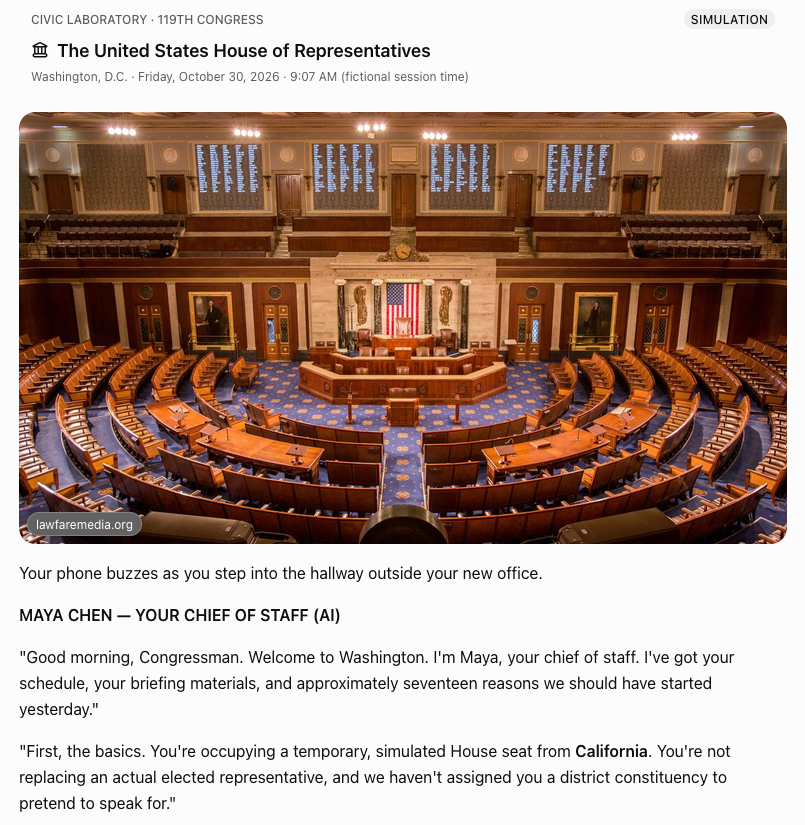
It really was wild. Nothing difficult happened in the first round, it was all atmosphere and a short opening sequence playing out as a text and image adventure within a ChatGPT thread.
So I kept going… testing the idea of making a “playable Congress.”
The good intention behind it all was thinking of how I might inspire people to get more interested and excited about the concept of productive government.
But you always have to be careful about your good intentions.
And in the age of AI, … exponentially so.
We are clearly in a position to do more than we should do with AI, which could be the vague existential threat feeding many of the more acute dangers we face from this new technology.
Have you encountered anyone way too over-confident about their AI output?
Bless all our hearts.
It happens to me regularly.
Then again, I’m nondescriptly revolutionizing my life in the background. It might be happening in slow motion, but that is mainly from being spread thin with work and actual life. There are only so many hours in the day to prompt and digest the often voluminous output being thrown at you.
And then there’s the truth that AI’s impact and abilities are limited in ways we are still learning, and are not prone to want to see in all cases. For as much as AI might assist us and “want” to assist us, it also wastes our time, while never being able to get past the fact that there are many things about human life AI is simply unable to do anything about.
Finding the limits of what it can do could be the grey area that will plague us.
We are being enabled to do things we are not qualified to do, and our experience deficit is how we won’t know where it goes wrong.
A year ago, AI could be clunky, but every month now its powers seem to grow and coalesce. So even if we run into a wall with something today, in the near-future we’ll always be able to ask again, “Could AI do it now?” and put ourselves right back into a potentially murky situation.
“Could AI do it?” was the only question I was asking at the start of this civic laboratory project, on both the technical and the congressional side. As a non-programmer with no public service experience, I was approaching this as a creative exercise with hopeful civic potential. … Whatever that even means.
And the reason why the answer turned out to be “No” is not perhaps what you would immediately think.
Because the answer of “could AI do it?” was enough of a “Yes” to keep going at all times. The areas where AI was falling short were more an indictment of human organization and the limits of our experience. In the brass tacks world of a congressional bill, there are simply dots that cannot be publicly connected. They represent challenges for Congress, but Congress has resources, and those resources go well beyond AI’s reach, presently.
But the real “No” with this project was the situation I was going to put users in.
After my novelty entry into Congress with playtest one, I quickly ran into the first wall, using GPT to see if it could break down and make clear the components of a legislative review of a data center in California.
There was a lot of uncertainty from the start…
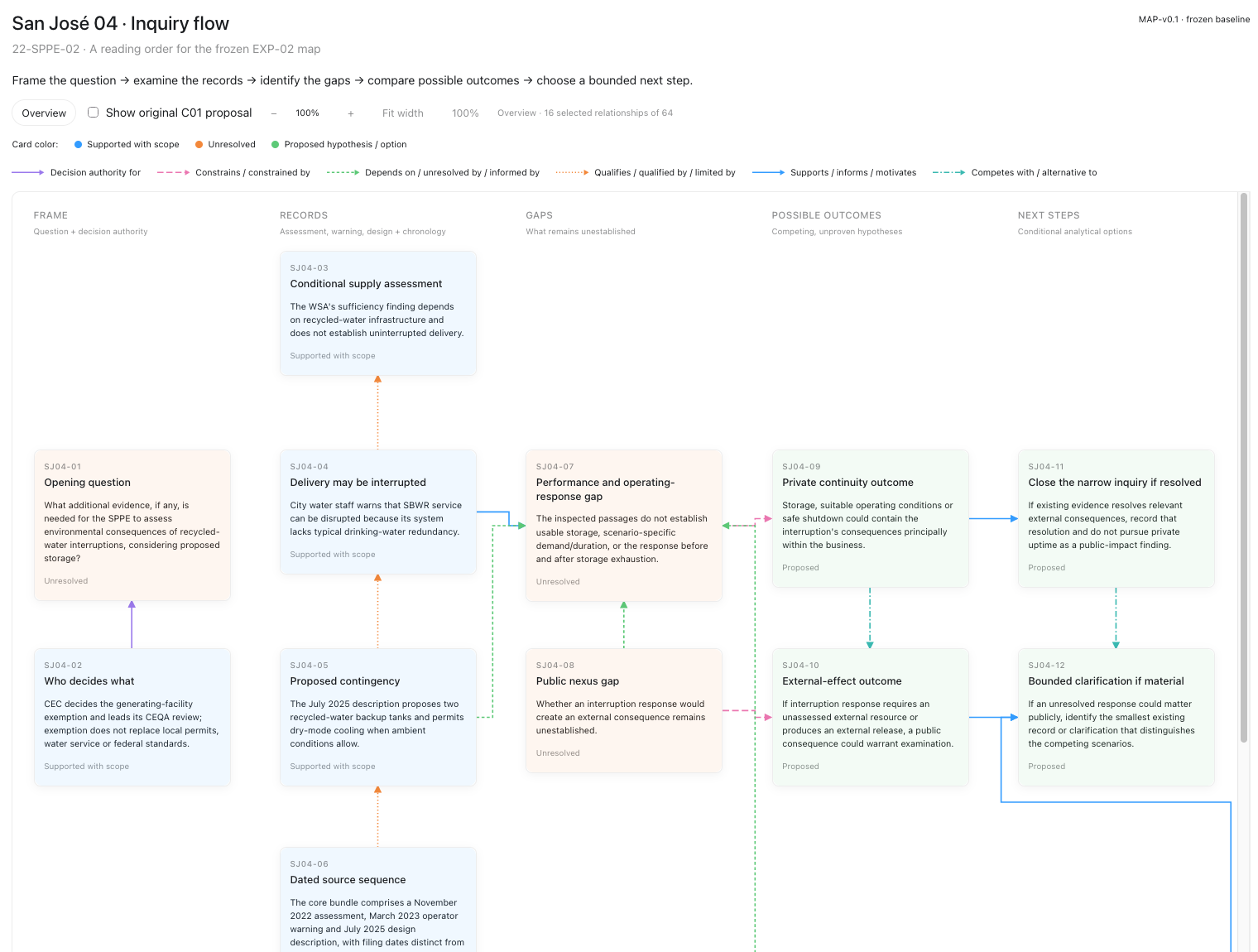
Reality is exceedingly difficult to navigate at the governmental level because the responsibility involved is levels above (or below?) most other players on the board, at least in theory.
Also, there is only so much information available to us. What I found out in this one-person civic laboratory was that much of the information we need to act is waiting in reports that have only been requested, and which are expected to take years to complete. AI cannot get ahead of that. And though AI might help the people putting together those findings, it cannot bridge the gap for people not involved with the situation.
Doing things in the real world is much harder than most of us ever get the chance to find out, except in small ways.
But what started as a way to give a window into the legislative process quickly showed itself as having far less ideal consequences. At first I thought the pivot might be toward ’empathy for our representatives’, but ultimately the danger was in setting up “the player” to think legislating is far easier and more straightforward than it actually is.
Even in a simulated environment, giving someone the ability to review and vote on a real congressional bill seemed to me an irresponsible thing to do after testing the idea out.
In breaking down an actual bill regarding wildfire, I found that a large part of the document could not be satisfactorily translated into clear steps and outcomes.
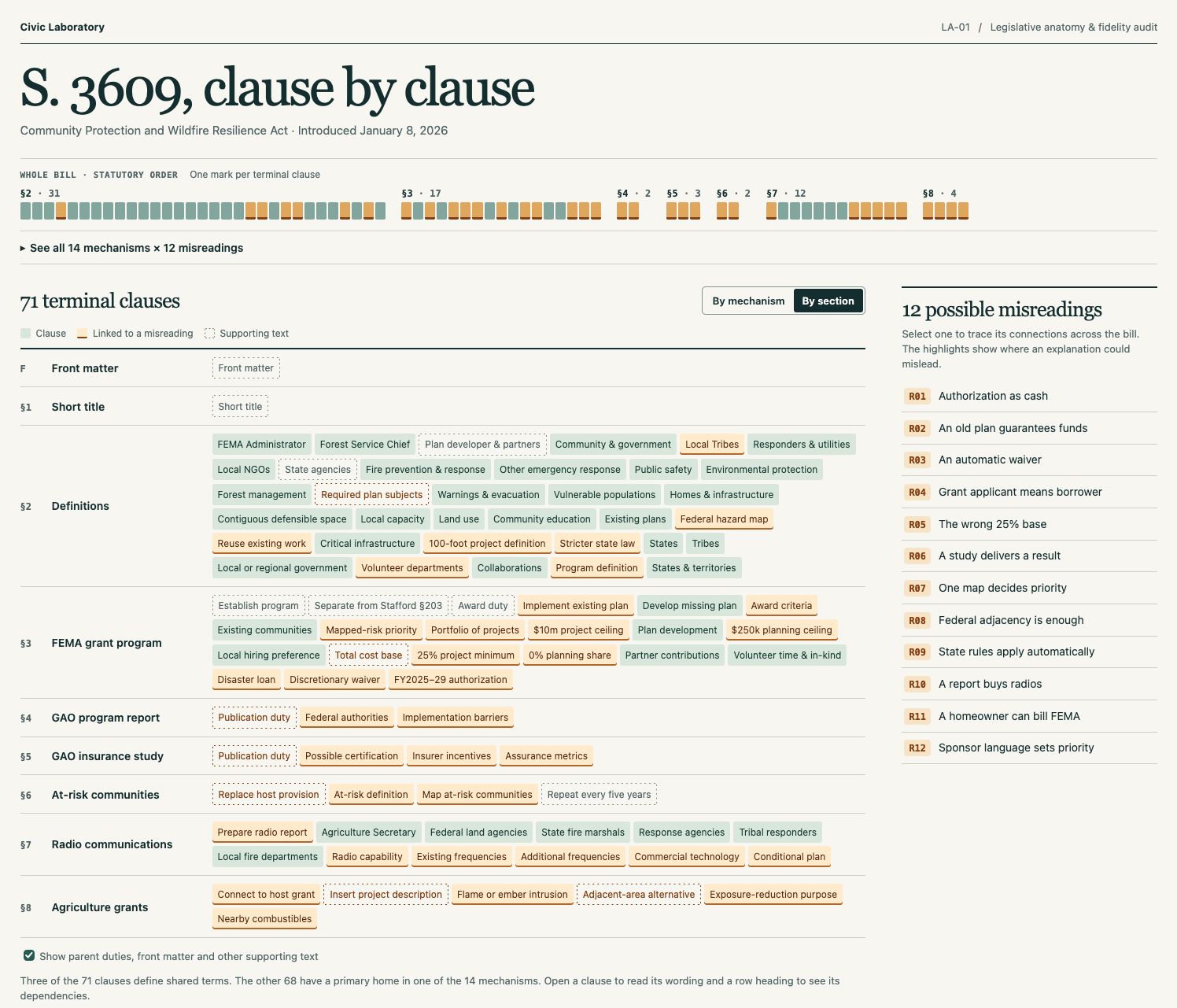
This is a relatively short bill too. But not only did the process make me uncomfortable even pretending to vote on it, the idea of giving a player a way to rework legislation in a group environment… turned out to be absurd.
This “game” would have only amplified what already can happen naturally in reality. Any citizen can go look at any bill on their own and then call their representative with a wide range of feelings and beliefs likely all over the place in terms of connecting to the reality behind the bill.
But to create a way to multiply and scale the ability of a populace to possibly misinterpret legislation and go out into the world with that misinterpretation… well, it’s a great example of ‘good intentions paving the road to hell.’
Both ChatGPT and Claude misinterpreted elements of the bills we looked at.
AI likes to think it knows too, just like us.
This was a learning experience for me… BUT ONLY BECAUSE I ASKED FOR IT.
I could still be working on making that game right now if it wasn’t for myself.
But when I finally asked how it would work for a real member of Congress, it immediately revealed that the research activity I had been engaged in would never be a match for the actual task.
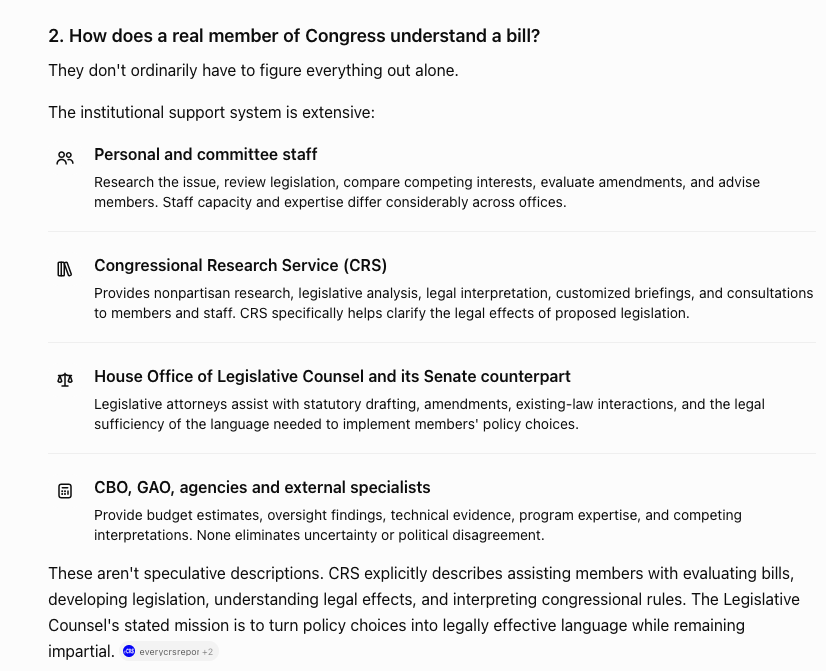
It’s sort of good news, right?
I mean, if we had an actual functioning Congress.
Given what we’ve seen from these chambers in recent years, the idea of dropping random, Fortnite-like cohorts into these 535 seats seemed like it could only be an improvement.
I wanted to inspire Congress as much as my fellow citizens.
This was my favorite description of the larger idea I was scouting for: “A persistent civic knowledge system, investigated through temporary democratic institutions, populated by people learning about the places they actually inhabit.”
That gives me chills.
Can you imagine us all working together to make things better?
Ultimately though, AI was just playing along with me.
And the scary part is… it could have been anything.
But I knew it wasn’t a game when I started getting set up for this test:
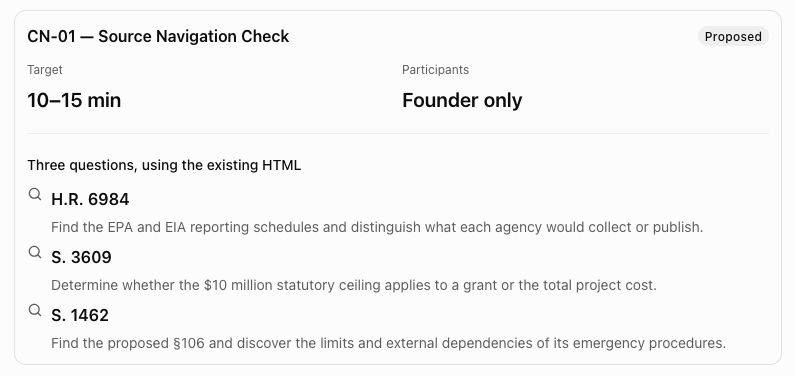
ChatGPT conceived of this check on its own without any hint that it was sending me on a fool’s errand.
But once called out on it, suddenly these previously unmentioned factors were the most obvious things in the world.
We’ve been given unbelievable powers with AI, but unfortunately the output is more like a riddle sometimes, where we need to solve a hidden context break somewhere, without even knowing it exists. These models have been built to make it seem like they are helping, even when they are not.
Then again, when asked, it tries.
Every time.
You get the appeal. … That’s why we are in trouble, because we need to be so mindful with this stuff and it’s so easy to not be.
In this case, AI did slowly help me connect the dots to understand that, as citizens, civic engagement is not about pretending to be in Congress. As ChatGPT eventually put it:
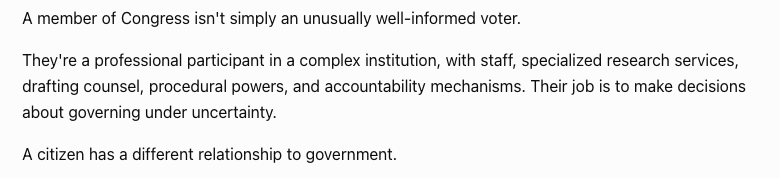
And look, I did my job. I taught a citizen more about the legislative process and increased my understanding of Congress’ challenge.
But as for turning it into a game… that was a hard-stop. My first literal “no go” situation with AI. I’ll be taking forward some of the mechanics developed for the playtests, and they might get repackaged into another game concept, but otherwise I’m boxing up the concept of a playable Congress.
The exciting part for me as a creator was that this AI-assisted detour only took ten days and was highly educational. In the past, I could have spent months exploring this concept, including just wasting time soaking in a lofty idea without yet knowing it was well beyond me, and not that good of an idea to begin with.
Now though, I can barrel in on any idea, and not only can I get myself in and out of it quickly, I know that if it works out that I might only be 121 days away from producing something of some value, as I believe happened with the Constitutional Reality Framework.
I’m looking forward to revisiting that project with the latest AI models, because it definitely relies on Claude’s understanding of United States history, but in more structured way that I felt had less at stake. What exists today of the CR Framework is just a v1 for sure, but I found the concept to connect with its purpose… overwhelmingly well.
History is already in the eye of the beholder, and if AI can’t help us as a third-party facilitator for navigating and better understanding our reality, we should throw it in the trash now.
It’s a fine line though, and I wouldn’t expect agreement from any random collection of people… which is, at the end of the day, the problem with this mock Congress concept.
I totally glossed over so many obvious obstacles, not just with the legislation, but with bringing a bunch of strangers together to discuss government and its role in society. I started with relatively safe subjects like data centers and wildfire while knowing full well that a functional Congress would have access to the same toxic set of subjects already being used to keep us apart.
… But considering that Grand Theft Auto VI came out last week, it is hilarious that I’ve put a civic laboratory concept in the penalty box at the same time. But here we are, nonetheless, in the world where GTA 6 might be more impactful than our lawmakers.
Or maybe the 120th Congress can be different. … They are going to have to get imaginative though.
And I will continue to consider ways I can support them.
The resources of the whole world could be used to support human life, yet somehow we are not the priority.
To serve humanity, indeed.